



Your Travel Experience with Galapagos PRO
Day 1
Arrival in San Cristóbal
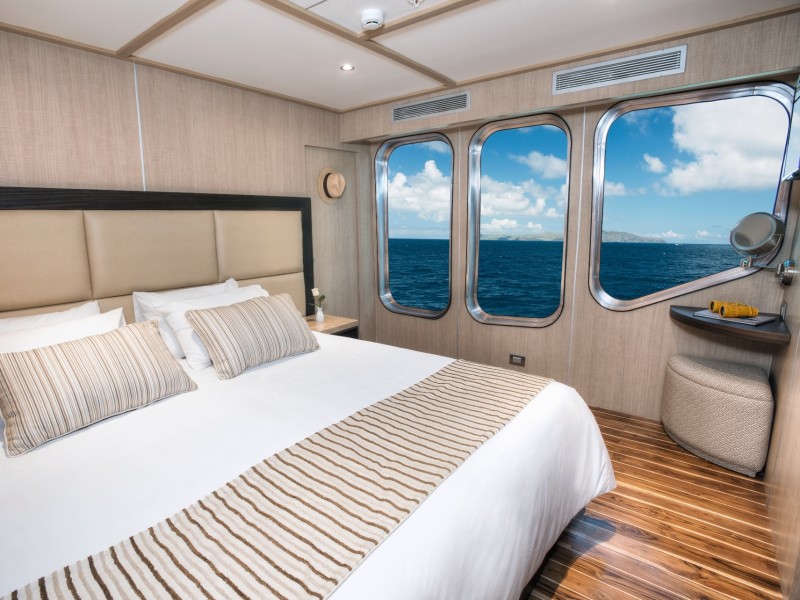
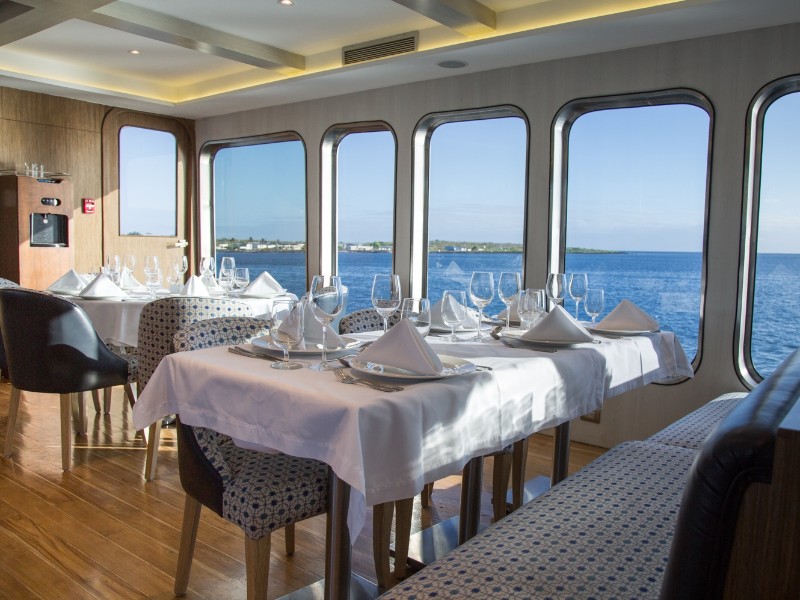
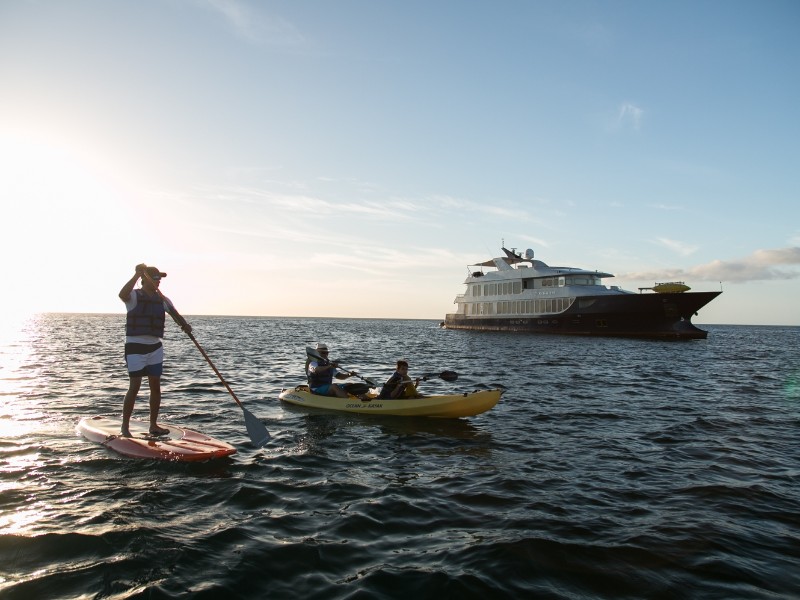
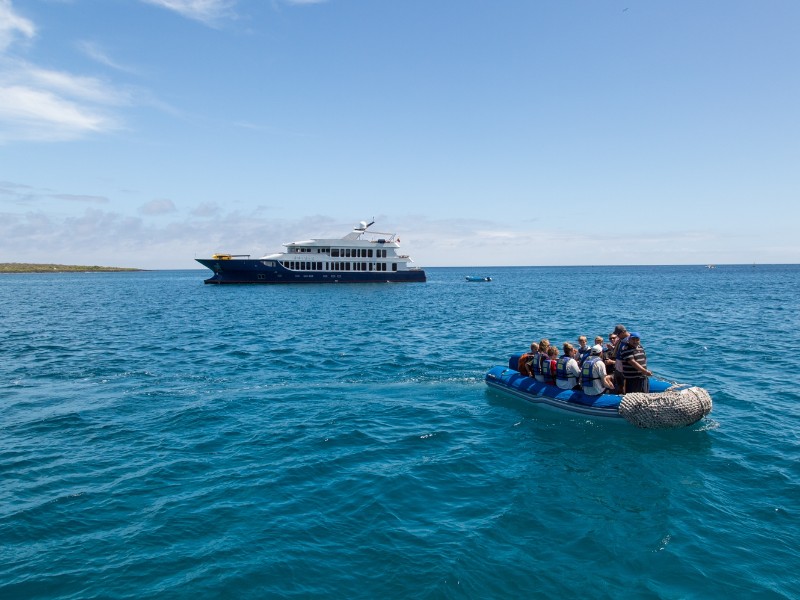
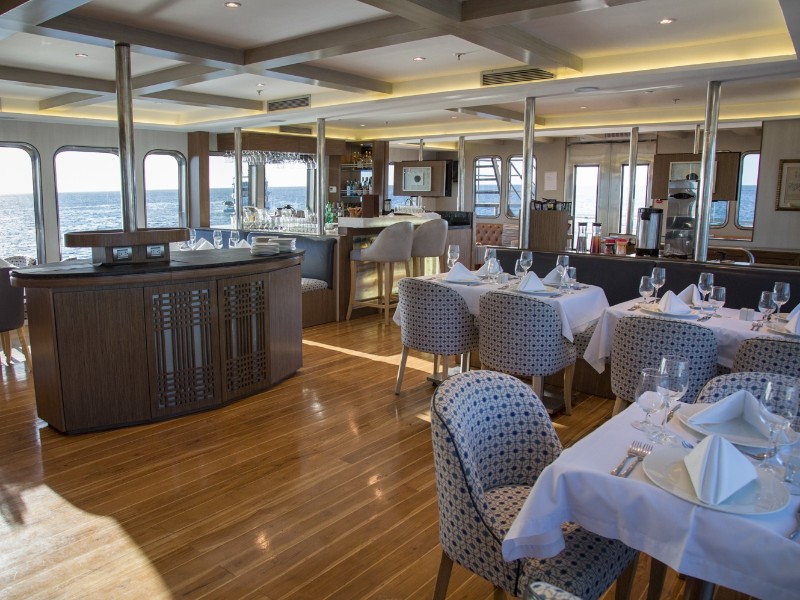
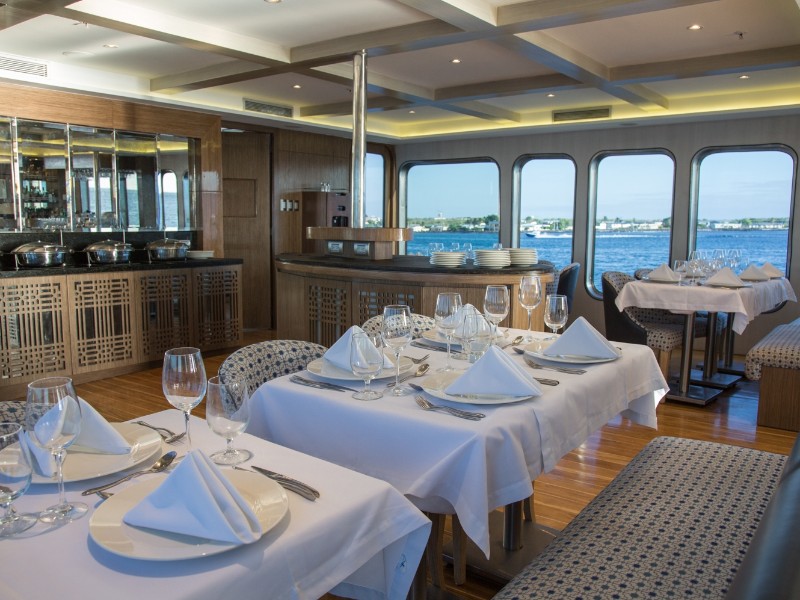
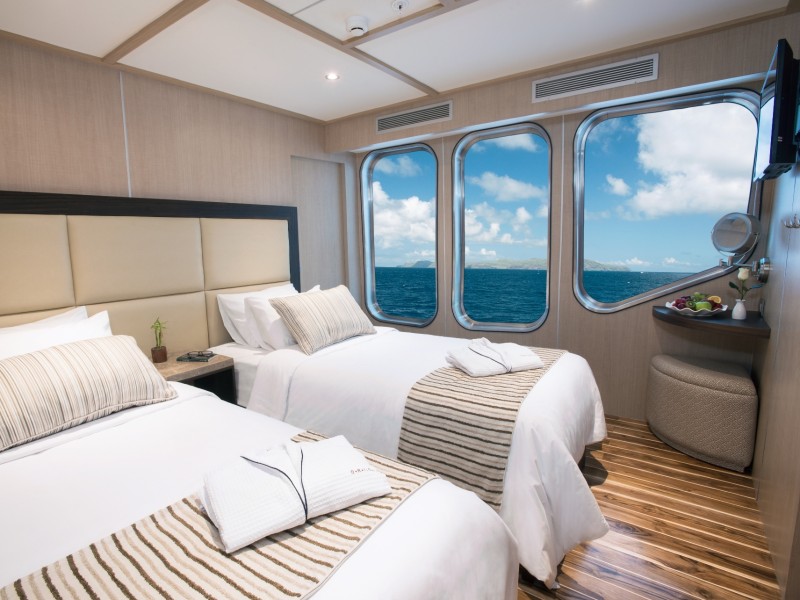
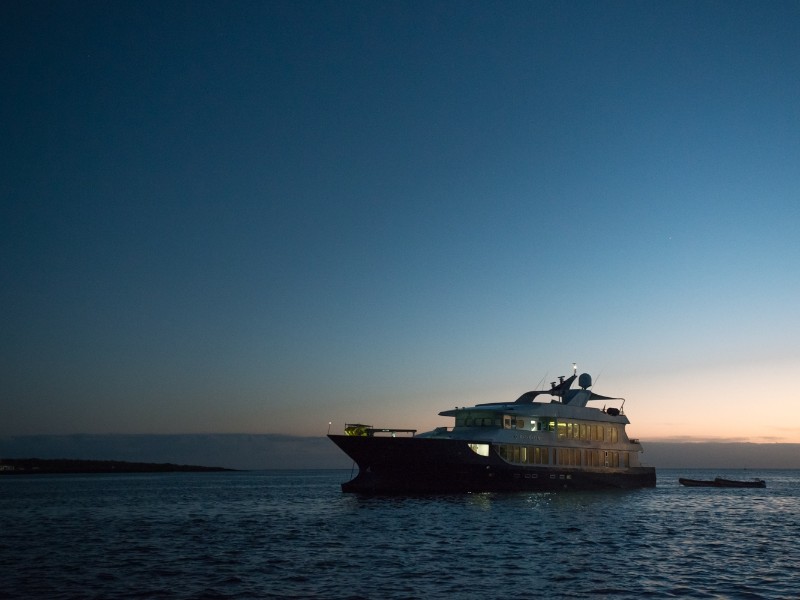
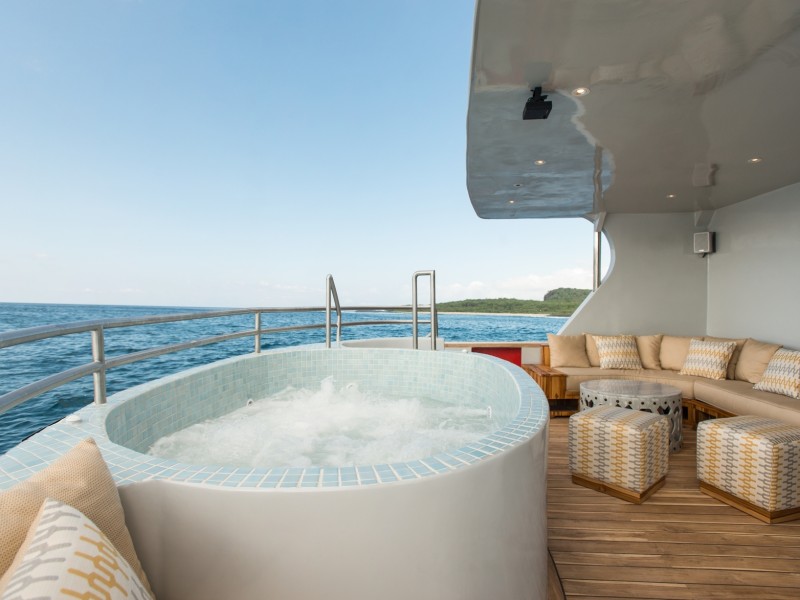
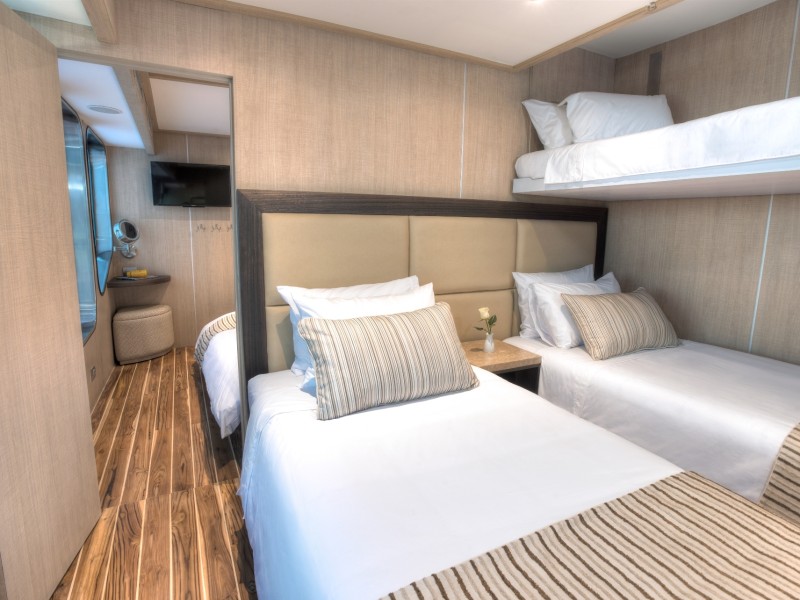
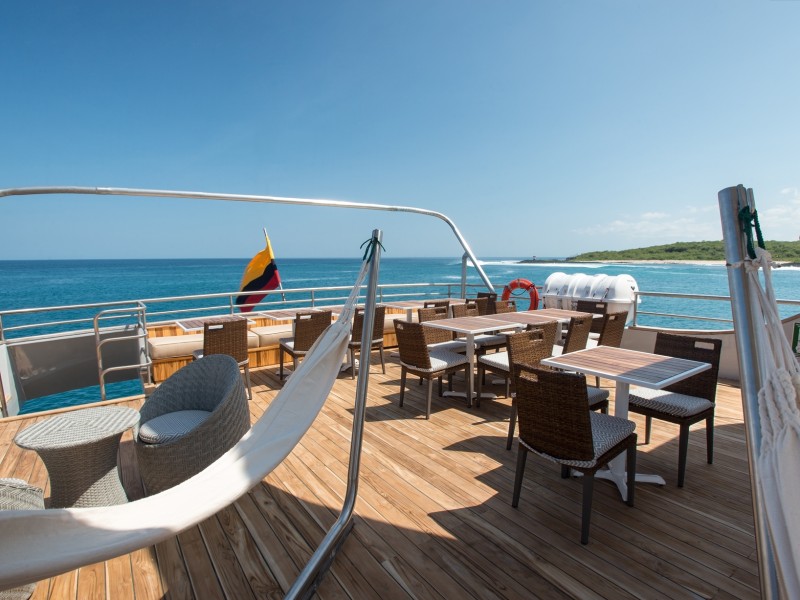
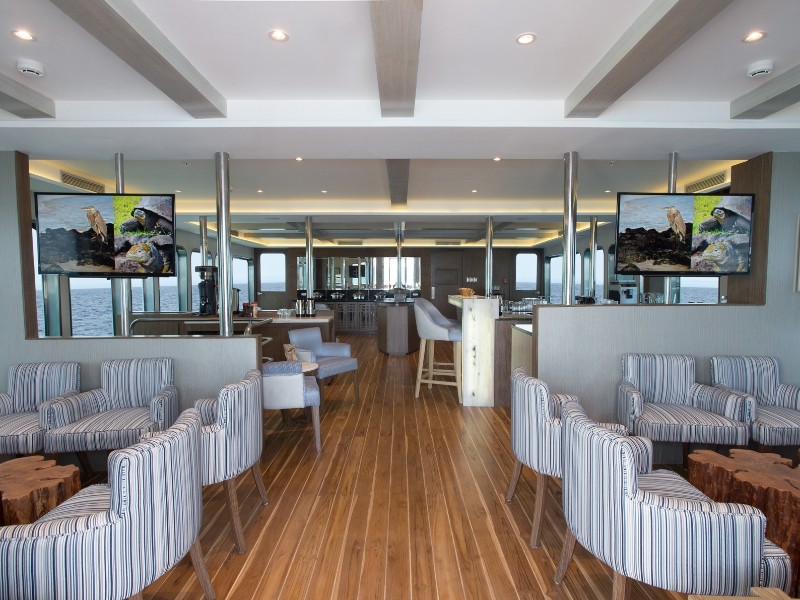
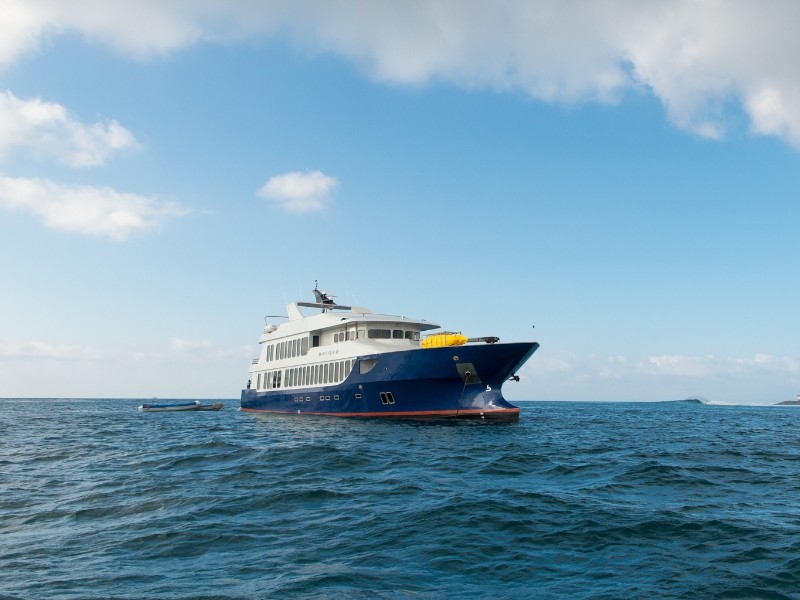
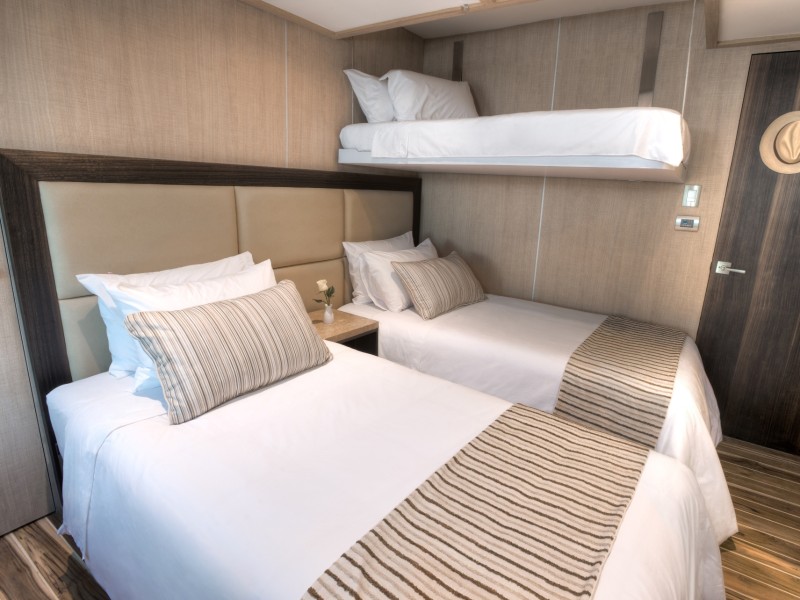
You will arrive on San Cristóbal in the morning, where your Crew will greet you and your guide will bring you to the boat. You will be informed about the coming days and get a chance to get to know the boat and your cabin.
Kicker Rock, San Cristóbal island
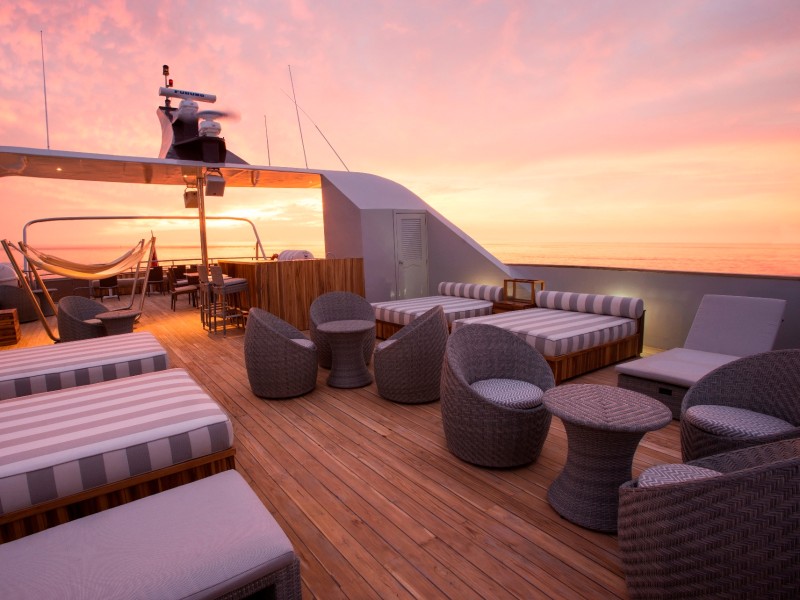
Afternoon: The famous Kicker Rock is one of the most famous features of the Galapagos Islands. This small island shape was formed from two large lava rocks that look like a sleeping lion when viewed from the south. Hence, the Spanish name "León Dormido" literally means the sleeping lion. As you cruise around the islands on board, the naturalist guides will point out the various birds that inhabit the islands. Among them are Nazca boobies, frigate birds and even swallow-tailed gulls. And if conditions permit, you will experience one of the most magnificent sunsets in the archipelago.
Day 2
Prince Philip's Steps and Darwin Bay, Genovesa
Morning: Prince Philip's Steps are a staircase sunken into volcanic rock that leads to a plateau rich with vegetation and wildlife. True to the nickname of Bird Island, this area is home to nesting masked and blue-footed boobies, Bahama ducks, petrels and gulls amongst a host of other local species. The Galápagos horned owls bask on the warm volcanic rocks here, paying no attention to the tourists around them.
Darwin Bay, Genovesa island
Afternoon: Genovesa Island is secluded from the other main islands in the north of the archipelago and is well-known as the Bird Island. Emerging from the narrow entrance, you'll reach Darwin Bay, surrounded by protective cliffs. Frigatebirds regularly patrol the skies here and petrels can be seen hunting coastal waters for smaller fish. The green water in the bay is evidence of a high plankton content which attracts fish and seabirds, making this wildlife-rich bay a wonderful site for snorkeling. With some luck, you may also encounter peaceful hammerheads and black spotted stingrays.
Day 3
Bachas Beach, Santa Cruz island
Morning: On the north side of Santa Cruz, you will land on Bachas’s beach - one of the most important nesting sites for the Galapagos Islands’ Sea turtle population. A hidden lagoon behind the bay reveals a treasure trove of animal sightings - sunbathing iguanas, curious shorebirds, and Darwin finches, mockingbirds, and seagulls frolic here. The native plant life in this area is also interesting. Red and black mangroves and salt bushes line the edges of the pond. In this heavenly place, you will also find the remains of barges that sank long ago when the US Navy operated a base on the island of Baltra during the Second World War. Local people changed the word Barges to "Bachas".
Cerro Dragon, Santa Cruz island
Afternoon: Dragon Mountain represents a great success in the history of the maintenance and protection of the nature of the Galapagos Islands. By 1975, almost all the land lizards of Dragon Mountain were extinct, as introduced dogs hunted them and drastically decimated the numbers. With the Galapagos breeding program, the population could be increased again and already in 1991, the last captive-born land lizard was released into the wild. Since then, the breeding stations have been controlling populations and trying to restore and support the species' population as best they can. But not only does the mountain have a lot to offer, but the coast is already impressive! The rocky beach is a beautiful place to get to know the underwater world and see rays, sharks, and green sea turtles. At the foot of the mountain, you will pass two saltwater lagoons where you may see a flamingo or two, and you may also encounter Darwin's finches and mockingbirds during the short hike up.
Day 4
Punta Vicente Roca, Isabela island
Morning: The sea-horse-shaped island of Isabela is the largest of the archipelago and the most volcanically active. Punta Vicente Roca is considered one of the most impressive and spectacular places of the enchanted Galapagos Islands, with high cliffs and tuffstone giving this area a majestic feel. While you explore the two coves and the large bay with spectacular sea life, keep an eye out for seahorses, sea turtles, and the weird and wonderful mola-mola, also known as sunfish. In good condition, Punta Vicente Roca is considered one of the best snorkelling sites in the Galapagos.
Urbina Bay, Isabela island
Afternoon: On the east coast of Isabela Island lies Urbina Bay, one of the youngest bays in the Galapagos. Formed in 1954, by an upwelling of the coast and was pushed up 5 meters. This brought a variety of corals to the surface, which can now be admired. However, this view will not last long as the air is destroying the coral reef. After a wet landing in the bay, you will go on a 3.5-kilometre march into the interior of the island. Here, you have a high probability of seeing giant tortoises and land iguanas, which are only found in the Galapagos Islands. As the trail leads back to the coast, you will encounter flightless cormorant colonies. The bay offers a fantastic place to snorkel and see Galapagos sea lizards feeding underwater.
Day 5
Fernandina Island
Morning: As one of the youngest islands, formed around 700,000 years ago, Fernandina is also the only island that has not been colonised by mammals or other species apart from endemic ones, making it one of the few untouched ecosystems in the world. The volcano “La Cumbre” last erupted in 2005 and dominates the landscape with lava fields stretching to the ocean. The highlight of the island is the nesting site of the unique flightless cormorant. In addition, here in the north of the island, you have the chance to see Galapagos sea lions, marine iguanas, and some Galapagos penguins. With a little luck, you may also see a Galapagos hawk circling above your head in the sky.
Tagus Cove, Isabela island
Afternoon: You will take an excursion to the infamous Tagus Cove - a favorite anchorage of pirates and whalers for centuries. The deep blue cove is home to breeding penguins, flightless cormorants, noddy terns, shearwaters and blue-footed boobies. A steep trail through dry balsam tree forests and cacti leads to a salty, green crater lake (Laguna Darwin). Sea turtles and marine lizards appreciate the food-rich bay, making it ideal for snorkeling despite the abundance of green algae.
Day 6
Rábida Island
Morning: The small island has only one access point for visitors, located on the east coast. The red beach, the lagoon near the coast and the 1.1-kilometre-long circular walk on the island are breathtaking. The red colour of the rock and beach is due to the porous ferruginous volcanic rock and various environmental factors such as rain, saltwater and the coastal winds. Along with the highest concentration of volcanic features and the environmental factors that act as oxidants, the red colour of the island is created. After a wet landing, you can see sea lions and marine lizards relaxing on the Galapagos red beach. Just past the beach is one of the nesting sites for pelicans, which use the island's plants for shelter. It is one of the best places to see pelicans, and sometimes a flamingo or two is spotted. The path of the island leads through opuntias, and a variety of birds can be seen here, such as Darwin's finches, Galapagos doves or Galapagos mockingbirds. After the short walk, you can dive and swim in the bay; the clear water offers a good view of the underwater world.
Puerto Egas, Santiago island
Afternoon: The black beach along the northwest coast of Santiago Island is a great sight, even from the boat. After arriving at the beach, two paths invite you to take a walk. One leads you along the coast to "Fur Seal Grotto", where fur seals lie in the shade and rest on the cool stones of the coast from the strong sun. The grotto provides an excellent place for this, and the surrounding pools of the tide attract marine lizards to forage in them.
The second trail takes you to the island's Pan de Azúcar volcano, it is responsible for turning the beach black. The volcano's crater is filled with salt water, which dries up in hot weather, leaving a dry saline landscape. Between 1928 and 1930, a salt mine was considered, but it was decided against because it was not feasible or lucrative. The lagoon is often home to Galapagos flamingos and other birds such as the Galapagos hawk, which circles high above the landscape.
Day 7
Fausto Llerena Aufzuchtsstation, Santa Cruz island
Morning: Visit the Galapagos giant tortoises and land iguana breeding programme, where the famous Lonesome George (the last surviving specimen from Pinta Island) lived for decades. The centre is managed by Galapagos National Park (GNP) staff in collaboration with scientists from the Charles Darwin Station (CDS). Here, eggs from the Pinzon, Santiago and Santa Cruz Islands hatch without the risk of introduced species. After artificial incubation, the "galapaguitos" (newborn turtles) are bred until they are 5 years old so that when they are released in their original habitats, they have enough skills to survive on their own. Since the 1970s, more than 2,000 specimens have returned to their native islands. In addition, Darwin Station works on several scientific projects, botanical research and provides environmental education for local communities, schools and tourists. If there is still time, you can take a stroll through the small town of Puerto Ayora.
Highlands, Santa Cruz island
Afternoon: As you venture into Santa Cruz's higher altitude areas, you will notice the changes in the vegetation as the climate becomes wetter and warmer. The earth in the upper altitudes is rich in minerals. Coffee plantations and fruit orchards line the streets. Here you can observe the famous Galapagos giant tortoises in the wild, using the new knowledge you gained at Charles Darwin Station in the morning. The Scalesia forests in this area offer the opportunity to discover endemic species of the Galapagos Islands, as well as giant cacti and a variety of deciduous trees and edible fruits. Here you can also visit the twin 'craters' Los Gemelos. While they are not craters in the technical sense, these 70-meter vertical gullies with a carpet of lush vegetation are an impressive sight to behold.
Day 8
Interpretation Center, San Cristóbal island
Morning: The National Park Interpretation Center, located on San Cristóbal, was built in collaboration with the Spanish Science Center. The tour offered by the Center for Interpretation's facilities offers a good overview of the Galapagos Islands. The tour takes us through the history of the islands in the context of nature, humankind, and conservation. It also tells the story of the first settlers on the islands.
Return to San Cristóbal
You will return to the harbour of San Cristóbal. From there, transfer to San Cristóbal Airport in time for your return flight to the mainland or continue with your planned route through the Galapagos.