




Ihr Reiseerlebnis mit Galapagos PRO
Tag 1
Ankunft am Flughafen und Transfer
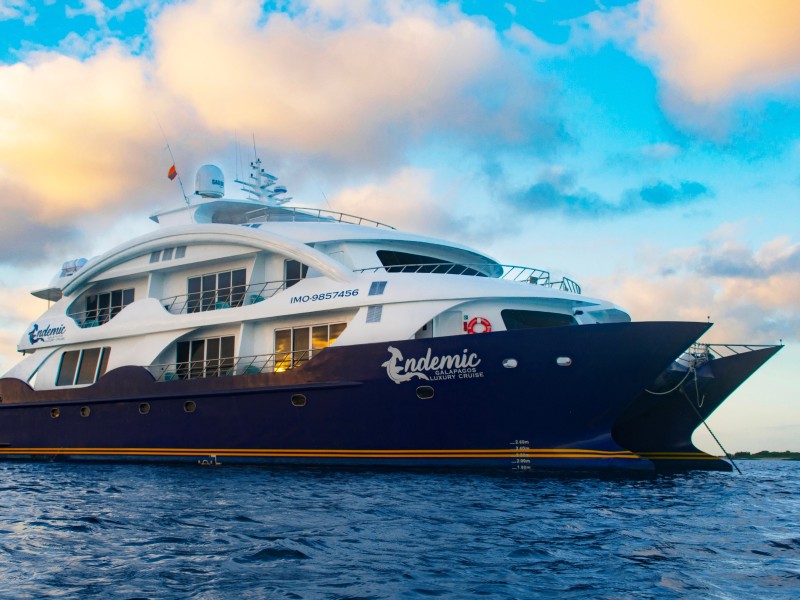
Sie werden morgens am Flughafen in Baltra eintreffen, wo Sie von der Crew empfangen werden. Ihr Reiseleiter begleitet Sie dann zum Schiff und Sie werden über die kommenden Tage informiert und können sich in den Kabinen einrichten.
Cerro Dragon, Insel Santa Cruz
Nachmittags: Der Drachen Berg repräsentiert einen großen Erfolg in der Geschichte der Instandhaltung und Schutz der Natur der Galapagos Inseln. Bis 1975 waren fast alle Landechsen des Drachen Bergs ausgelöscht, da eingeschleppte Hunde sie jagten und die Anzahl drastisch dezimierten. Mit dem Zuchtprogramm der Galapagos Inseln konnte die Population wieder gesteigert werden und schon 1991 wurde die letzte in Gefangenschaft geborene Landechse in die Freiheit entlassen. Seither kontrollieren die Zuchtstationen Populationen und versuchen die Population der Arten so gut wie möglich wiederherzustellen und zu unterstützen. Aber nicht nur der Berg hat viel zu bieten, schon die Küste ist beeindruckend! Der felsige Strand ist ein schöner Ort um die Unterwasserwelt kennen zulernen und Rochen, Haie und grüne Meeresschildkröten zu sehen. Am Fuße des Berges kommen Sie an zwei Salzwasserlagunen vorbei, wo Sie den einen oder anderen Flamingo sehen können und treffen während der kleinen Wanderung nach oben vielleicht auch noch auf Darwin Finken und Spottdrosseln.
Tag 2
Leon Dormido und Cerro Brujo, Insel San Cristóbal
Vormittags: Der bekannte Kicker-Rock ist eines der berühmtesten Merkmale der Galapagos-Inseln. Diese kleine Inselform entstand aus zwei großen Lavafelsen, die vom Süden betrachtet wie ein schlafender Löwe aussehen. Daher der spanische Name "León Dormido" wortwörtlich der schlafende Löwe. Während Sie an Bord die Inseln umfahren werden, die Naturführer Ihnen die verschiedensten Vögel, die die Insel bewohnen, zweigen. Darunter befinden sich Nazca-Tölpel, Fregattvögel oder auch Schwalbenschwanzmöwen. Und wenn die Bedingungen es erlauben, werden Sie einen der großartigsten Sonnenuntergänge im Archipel erleben.
Der weiße Strand der Bucht vor dem Hexenhügel (Witch Hill) ist einer der schönsten des Archipels. Der Hügel selbst ist der Überrest eines vulkanischen "Tuffsteinkegels" - aus verdichteter Vulkanasche und Schutt. Zudem ist es einer der ersten Orte, die Charles Darwin auf seiner Reise besuchte. Hier sehen Sie neben einer großen arten Vielfalt an Land auch so einiges unter der Wasseroberfläche. Während eines Spaziergangs können Sie alles aufnehmen, und Tiere wie Galapagso Seelöwen, Meerechsen, Pelikane und Blaufußtölpel sehen. Wenn Sie sich dazu entscheiden, sollten zu Schnorcheln, werden Sie auch hier nicht enttäuscht. Neben Galapagos Rochen, Meeresschildkröten und den verschiedensten tropischen Fischen können Sie hier auch verschiedene Korallen im Wasser entdecken. Und auch wenn Sie nicht ins Wasser gehen wollen, so können Sie durch das klare Wasser auch vom Schnellboot aus einer Vielzahl der Unterwasserbewohner entdecken.
Isla Lobos, Insel San Cristóbal
Nachmittags: Die kleine Insel Lobos, in der Nähe der Insel San Cristóbal, beherbergt nicht nur eine Seelöwenkolonie, sondern auch ein Paar Fellrobben, die hier ihre Ruhe finden. Inmitten dieser großen Seebewohner finden sich zudem nistende Blaufußtölpel, die hier ihre Jungen großziehen. Es führen ein oder zwei Pfade zum Zentrum der Insel, an welchem man herrlich die Ruhe des Galapagos Archipels genießen kann. Es ist ein beliebter Ort für Besucher, um sich einfach der Natur und der Wunder der Inseln bewusst zu werden. Zurück am Strand bietet die Insel durch ihre Positionierung Nah der Insel San Cristóbal einen hervorragenden Ort zum Schnorcheln, um die Unterwasserwelt etwas zu bestaunen. Das Wasser ist klar und ruhiger als in anderen Gegenden des Archipels und bietet somit perfekte Bedingungen, um Seepferdchen und verschiedenste bunte Tropen Fische zu sehen.
Tag 3
Gardener Bay & Osborn Islet, Insel Española
Vormittags: Der markante weiße Strand von Gardner Bay ist ein wichtiger Brutplatz für die pazifische grüne Meeresschildkröte. Aber zweifellos ist hier die große Galapagos Seelöwenkolonie die Hauptattraktion. Die Weibchen bleiben das ganze Jahr über in diesem "Kinderzimmer" und säugen ihre Jungen bis zu einem Alter von 3 Jahren, obwohl diese bereits nach 5 Monaten mit eigenständigen Fischen beginnen. Während der Brut- und Paarungszeit wird die Kolonie noch größer. Die stärksten Junggesellen und ältesten männlichen Tiere kehren von ihren abgelegenen Plätzen zurück und beginnen erneut, einen Teil des 1300 m langen Strandes für sich zu erobern und zu verteidigen.Da es keine Pfade gibt, bleiben Sie am Ufer und beobachten von dort aus die Galapagos-Bussarde, amerikanischen Austernfänger, Galapagos-Tauben, Spottdrosseln, Goldwaldsänger, Lavaechsen, Meerechsen und drei Darwinfinkenarten: den Geospiza conirostris, eine Unterart des großen Kaktusfinken, der dem großen Grundfinken ähnelt, den kleinen Grundfinken (Geospiza fuliginosa) und den Waldsängerfinken (Certhidea Olivacea), eine weitere endemische Art. Die an der östlichen Seite der Insel gelegene Gardner Bay ist der Brutplatz von nahezu allen der weltweit 12.000 Galapagos-Albatrosspärchen. Beim Schwimmen und Schnorcheln sehen wir die vielfältige Unterwasserwelt: kalifornischer Engelfisch, Neonfisch, Papageienfisch, Mantarochen und Weißspitzen-Riffhai.
Punta Suarez, Isla Española
Nachmittags: Trockene Landung. Eine geologisch interessante Insel, auf welcher Sie die Vulkanformationen und die vielseitige Fauna erkunden: große Seelöwen- und Seevögel Kolonien, einschließlich der Española-Spottdrossel, des Nazca-Tölpels und des spektakulären Rotschnabeltropikvogels. Weiterhin gibt es Meerechsen, Lavaechsen und die bunten Klippenkrabben. Nach einer recht langen Wanderung vorbei an Nazca- und Blaufußtölpeln erreichen Sie die Nistplätze, die manchmal mitten auf dem Pfad liegen. Weitere interessante Vögel sind die Galapagostaube, der Galapagos-Bussard, die Gabelschwanzmöwen und die weltgrößte Kolonie von Galapagos-Albatrossen, die nur hierherkommen, um zu brüten. Galapagos-Albatrosse schweben die meiste Zeit ihres Lebens weit draußen auf See und kommen nur an Land, um sich fortzupflanzen und um ihr riesiges Küken (März-Dezember) zu versorgen. Riesige Wellen treffen auf die südlichen Basaltklippen von Suarez Point. Sie kreieren ein spektakuläres Blasloch, in dem das Wasser meterhoch in die Luft sprüht (je nach Jahreszeit, der Flut und wie stark die Meeresbrise die Wellen reindrückt). Nehmen Sie sich Zeit für diese fantastische Aussicht und lassen Sie diesen unvergesslichen Moment in Ruhe auf sich wirken.
Tag 4
Insel Santa Fé
Vormittags: Die 24 km² große und 60 Meter hohe Insel erreichen Sie nur mit einer Nasslandung und ist ein einzigartiger Ort in der Mitte des Archipels. Sie werden in einer unglaublichen Bucht auf die Insel kommen, gefüllt mit türkisfarbenem Wasser und umgeben von einem steinernen Riff. Die Insel ist Heimat für viele Landbewohner, wie einer der Landechsen-Arten des Archipels, Sie leben auf dieser Insel und ernähren sich von den Früchten und Blättern der Kakteen, die hier wachsen. Zudem lebt hier eine große Seelöwen-Kolonie und Galapagos Falken werden womöglich über Ihren Köpfen kreisen. Wenn Sie Interesse haben, können Sie hier auch schwimmen und schnorcheln, um die Unterwasserwelt etwas zu erkunden. Hier tummeln sich Meeresschildkröten, Seelöwen, Rochen und verschiedene tropische Fische im Wasser. Wer nicht ins Wasser möchte, kann am Ufer die Meerechsen, Galapagos Tauben oder Klippenkrabben beobachten.
Fausto Llerena Schildkrötenaufzuchtstation, Insel Santa Cruz
Nachmittags: Besuch der Galapagos-Riesenschildkröten und Landleguan-Zuchtprogramm, wo der berühmte Lonesome George (das letzte erhaltene Exemplar der Insel Pinta) jahrzehntelang lebte. Das Zentrum wird von den Mitarbeitern des Galapagos-Nationalparks (GNP) in Zusammenarbeit mit Wissenschaftlern der Charles-Darwin-Station (CDS) verwaltet. Hier schlüpfen Eier aus Pinzon, Santiago und Santa Cruz Islands ohne die Gefahr eingeführter Arten. Nach der künstlichen Inkubation werden die "Galapaguitos" (Neugeborenenschildkröten) bis zum Alter von 5 Jahren gezüchtet, damit sie, wenn sie in ihren ursprünglichen Lebensräumen freigelassen werden, genügend Fähigkeiten haben, um allein überleben zu können. Seit den 1970er Jahren sind mehr als 2.000 Exemplare auf ihre Heimatinseln zurückgekehrt. Darüber hinaus arbeitet die Darwin Station in mehreren wissenschaftlichen Projekten, botanischen Forschungen und bietet Umweltbildung für die lokale Gemeinden, Schulen und Touristen. Wenn die Zeit noch reicht, können Sie einen Bummel durch das Städtchen Puerto Ayora machen.
Tag 5
Insel South Plaza
Vormittags: Durch eine geologische Hebung entstanden die kleinen Inseln Plazas, diese zwei kleinen Inseln liegen im Osten der Insel Santa Cruz. Die nördliche Plaza Insel ist für Besucher unzugänglich, jedoch bietet die südliche Plaza Insel einiges für den Vogel-Entdecker und Naturbewunderer. An der Nordküste der Insel Plaza Sur kann man trocken anlanden, während die Südküste eine 25 m hohe, unzugängliche Steilküste ist. Die Insel ist etwa 1,5 km lang und 500 m breit. Die Insel ist Heimat einer ansehnlichen Zahl von Riesenopuntien und einem Meer von Sesuvien. Beide Pflanzen sind endemisch auf den Inseln. Die Sesuvien mit ihren mandelförmigen Blättern sind in der Regenzeit von Dezember bis Mai grün und werde in der Trockenzeit dann zunächst gelb, später rot und violett und verleihen der Insel damit ein etwas unirdisches Aussehen. Am Landungssteg erwarten Sie die Seelöwen. Von dort aus wandern Sie zum Kliff. Auf dem Weg sehen Sie viele, stattliche Landleguane. Ein idealer Ort zum Bestaunen der Flugmanöver der Gabelschwanzmöwen und anderer Seevögel.
Abreise von der Insel Baltra
Sie erreichen den Hafen von Baltra. Von dort aus fahren Sie entweder zum Flughafen und treten Ihren Rückflug zum Festland an oder Sie fahren mit Ihrem individuellen Galapagos-Programm fort.