

Ihr Reiseerlebnis mit Galapagos PRO
Tag 1
Ankunft auf der Insel San Cristobal
Sie werden morgens am Flughafen San Cristobal eintreffen, wo Sie von der Crew empfangen werden. Ihr Reiseleiter begleitet Sie dann zum Schiff und Sie werden über die kommenden Tage informiert und können sich in den Kabinen einrichten.
Kicker Rock, Insel San Cristóbal
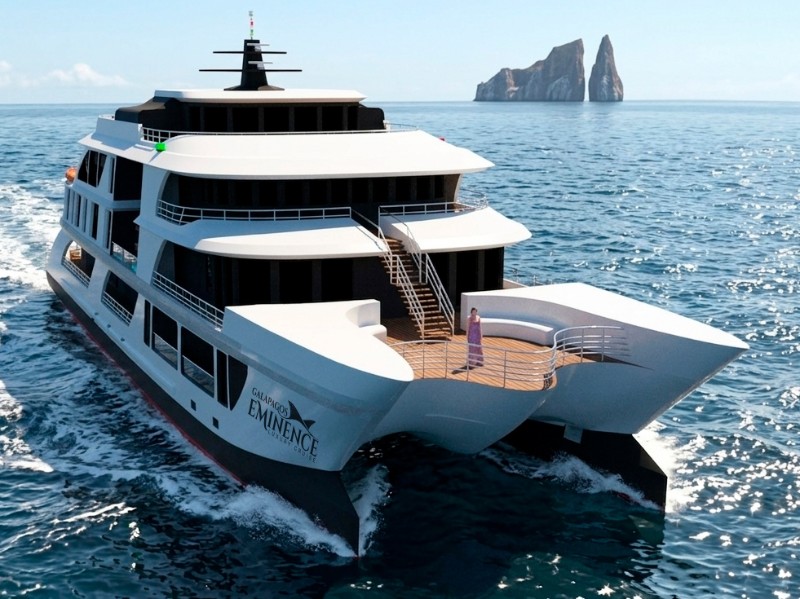
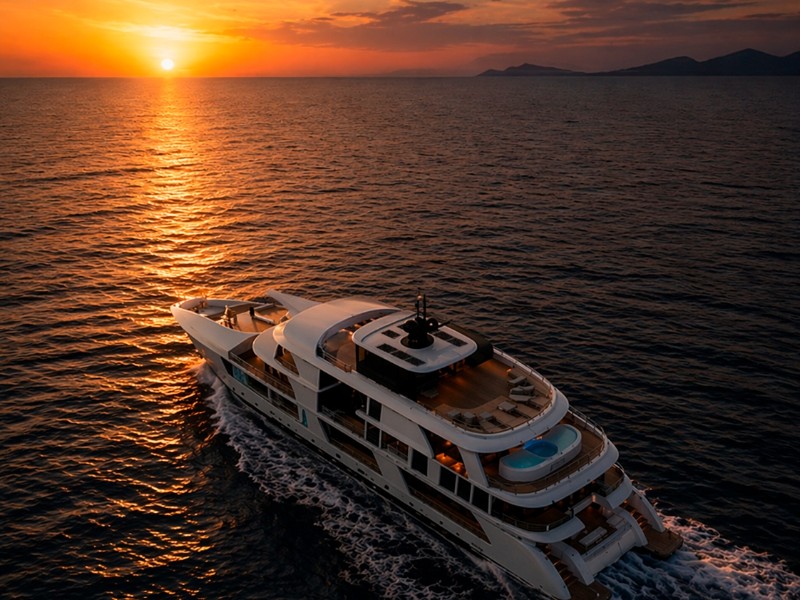
Der bekannte Kicker Rock ist eines der berühmtesten Merkmale der Galapagos Inseln. Diese kleine Inselform entstand aus zwei großen Lavafelsen, die vom Süden betrachtet wie ein schlafender Löwe aussehen. Daher der spanische Name "León Dormido" wortwörtlich der schlafende Löwe. Während Sie an Bord die Inseln umfahren werden, die Naturführer Ihnen die verschiedensten Vögel, die die Insel bewohnen, zweigen. Darunter befinden sich Nazca-Tölpel, Fregattvögel oder auch Schwalbenschwanzmöwen. Und wenn die Bedingungen es erlauben, werden Sie einen der großartigsten Sonnenuntergänge im Archipel erleben.
Tag 2
Suarez Point, Insel Española
Vormittags: Trockene Landung. Eine geologisch interessante Insel, auf welcher Sie die Vulkanformationen und die vielseitige Fauna erkunden: große Seelöwen- und Seevögel Kolonien, einschließlich der Española-Spottdrossel, des Nazca-Tölpels und des spektakulären Rotschnabeltropikvogels. Weiterhin gibt es Meerechsen, Lavaechsen und die bunten Klippenkrabben. Nach einer recht langen Wanderung vorbei an Nazca- and Blaufußtölpeln erreichen Sie die Nistplätze, die manchmal mitten auf dem Pfad liegen. Weitere interessante Vögel sind die Galapagostaube, der Galapagos-Bussard, die Gabelschwanzmöwen und die weltgrößte Kolonie von Galapagos-Albatrossen, die nur hierherkommen, um zu brüten. Galapagos-Albatrosse schweben die meiste Zeit ihres Lebens weit draußen auf See und kommen nur an Land, um sich fortzupflanzen und um ihr riesiges Küken (März-Dezember) zu versorgen. Riesige Wellen treffen auf die südlichen Basaltklippen von Suarez Point. Sie kreieren ein spektakuläres Blasloch, in dem das Wasser meterhoch in die Luft sprüht (je nach Jahreszeit, der Flut und wie stark die Meeresbrise die Wellen reindrückt). Nehmen Sie sich Zeit für diese fantastische Aussicht und lassen Sie diesen unvergesslichen Moment in Ruhe auf sich wirken.
Bahía Gardner, Insel Española
Nachmittags: Der markante weiße Strand von Gardner Bay ist ein wichtiger Brutplatz für die pazifische grüne Meeresschildkröte. Aber zweifellos ist hier die große Galapagos Seelöwenkolonie die Hauptattraktion. Die Weibchen bleiben das ganze Jahr über in diesem "Kinderzimmer" und säugen ihre Jungen bis zu einem Alter von 3 Jahren, obwohl diese bereits nach 5 Monaten mit eigenständigen Fischen beginnen. Während der Brut- und Paarungszeit wird die Kolonie noch größer. Die stärksten Junggesellen und ältesten männlichen Tiere kehren von ihren abgelegenen Plätzen zurück und beginnen erneut, einen Teil des 1300 m langen Strandes für sich zu erobern und zu verteidigen.Da es keine Pfade gibt, bleiben Sie am Ufer und beobachten von dort aus die Galapagos-Bussarde, amerikanischen Austernfänger, Galapagos-Tauben, Spottdrosseln, Goldwaldsänger, Lavaechsen, Meerechsen und drei Darwinfinkenarten: den Geospiza conirostris, eine Unterart des großen Kaktusfinken, der dem großen Grundfinken ähnelt, den kleinen Grundfinken (Geospiza fuliginosa) und den Waldsängerfinken (Certhidea Olivacea), eine weitere endemische Art. Die an der östlichen Seite der Insel gelegene Gardner Bay ist der Brutplatz von nahezu allen der weltweit 12.000 Galapagos-Albatrosspärchen. Beim Schwimmen und Schnorcheln sehen wir die vielfältige Unterwasserwelt: kalifornischer Engelfisch, Neonfisch, Papageienfisch, Mantarochen und Weißspitzen-Riffhai.
Tag 3
Post Office Bay, Insel Floreana
Vormittags: Nasse Landung. Diese Bucht an der Nordseite der Insel erhielt ihren Namen, weil im Jahr 1793 der Kapitän James Colnett dort eine Holztonne als informellen Briefkasten installierte. Er wurde von den vorbeifahrenden Seeleuten genutzt, die die Briefe dann an ihren Bestimmungsort brachten. Heute wird die Tradition von unseren Gästen weiter gepflegt. Unfrankierte Postkarten werden in die Tonne gelegt und sollen dann kostenlos zu ihrem Empfänger gelangen. Das kann Wochen, Monate und manchmal sogar Jahre dauern. Einige kommen nie an, andere sind schon vor Ihnen da. Zu sehen sind ebenfalls Darwinfinken, Goldwaldsänger und Lavaechsen. Ausgezeichnete Schnorchelmöglichkeiten mit grünen Pazifikschildkröten. Die Insel ist vor allem für die endemische Flora bekannt: Scalesia villosa, Lecocarpus pinnatifidus und Galapagos-Kreuzblumen. Schnorchelliebhaber können sich am Hauptstrand mit den spielenden Seelöwen vergnügen.
Punta Cormorant und Inselchen Champéon, Insel Floreana
Nachmittags: Dies ist einer der besten Orte auf den Galapagos-Inseln, um Flamingos, neben anderen Wasservögeln zu beobachten, wie beispielsweise Spießenten (oder Bahama-Enten). Die salzige Lagune beherbergt eine Brutkolonie von Dutzenden dieser eleganten, exotischen, aber nervösen Watvögel. Doch wenn die Brutzeit abgeschlossen ist und die Lagune austrocknet, dann neigen die Flamingos dazu in Bewegung zu sein, um in anderen Salzseen nach Garnelen und Algen zu suchen. Die Halbinsel Cormorant Point bildet das Äußerste Nordkap von Floreana, Sie ist von zahlreichen kleineren Vulkankegel und von tropischen Trockenwäldern (vorwiegend von Palo-Santo-Bäumen) bedeckt. An Ihrem Anlandungsstelle am Strand werden Sie von einer kleinen Galapagos Seelöwen-Kolonie begrüßt. Der auffällige grüne Sand an diesem Strand enthält einen hohen Anteil an glasigen Olivinkristallen, die von den umliegenden Tuffkegeln ausgeblasen wurden. Der Sandstrand auf der Südseite der Halbinsel besteht aus noch feinerem weißen Korallensand, der sich an Ihren Füßen sehr angenehm weich und glatt anfühlt. In der Brandung kann man Stachelrochen-Schulen entdecken, die den sandigen Boden lieben, um sich darin zu verstecken. In den ersten Monaten des Jahres kommen die pazifischen grünen Meeresschildkröten an Land, um hier ihre Eier zu vergraben. Am nächsten Morgen können Sie eventuell ihre Spuren in den Dünen entdecken oder vielleicht noch einen erschöpften und verspäteten Nachzügler ins Meer zurück kriechen sehen. Sie kehren zum olivgrünen Strand zurück, um dort inmitten von Meeresschildkröten, Rifffischen, Seelöwen und, mit etwas Glück, Weißspitzen-Riffhaien zu schwimmen und schnorcheln. Auf Floreana gibt es auch eine kleine Pinguinkolonie, die sich manchmal beobachten lässt.
Tag 4
Hochland, Insel Santa Cruz
Vormittags: Als einzige Insel, die alle Vegetationszonen für Besucher zugänglich macht, ist sie ein großartiger Ort für einen kleinen Ausflug ins Hochland. Schon vom Strand aus werden Sie von einer großartigen Flora und Fauna begrüßt, die Ihnen bis auf den höchsten Punkt der Insel folgt. Die Busreise führt Sie entlang der Landwirtschaft der Insel und geht fließend über in die grünen, nebelbedeckten Wälder. Sie erleben hier einen starken Kontrast zu den anderen Inseln, welche weniger Höhe und mehr Trockenheit aufweisen. Besuchen Sie gemeinsam mit Ihrem Reiseleiter verschiedene Orte hier im Hochland, wie dem Riesenschildkröten-Reservat und den bekannten Lavaröhren. Freuen Sie sich auf eine atemberaubende Landschaft und einen kurzen Spaziergang mit unvergesslichen Phänomenen.
Abreise von der Insel San Cristóbal
Sie erreichen den Hafen von Baltra. Von dort aus fahren Sie entweder zum Flughafen und treten Ihren Rückflug zum Festland an oder Sie fahren mit Ihrem individuellen Galapagos-Programm fort.