

Your Travel Experience with Galapagos PRO
Day 1
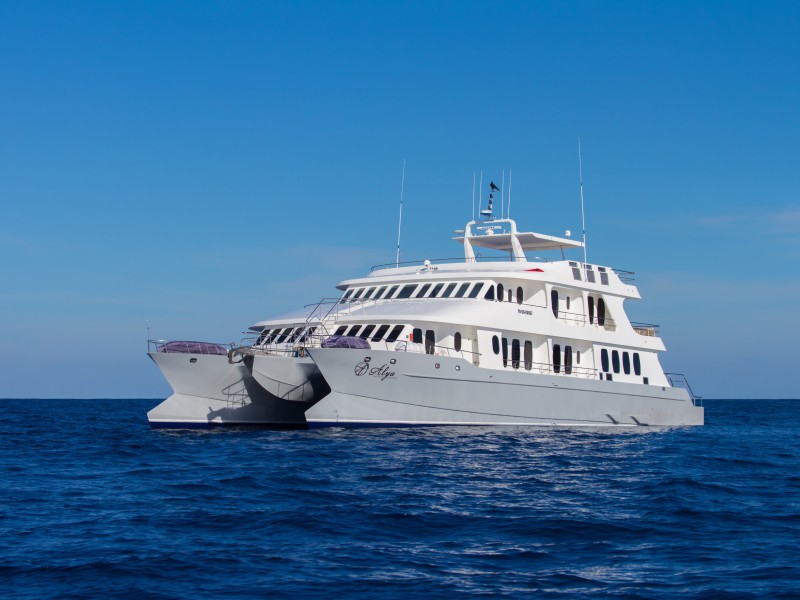
Boarding the Alya and a stop at North Seymour island
The Alya crew will welcome you on board and provide you with a briefing of what to expect for the following days. Afterward, a stop at North Seymour Island will be made. The small island of North Seymour is one of the most diverse islands in the Galapagos archipelago. It is only about two square kilometers in size and above all known for of the intensive courtship rituals of many magnificent frigatebirds, taking place here during mating season. The island is also home to large colonies of land iguanas, marine iguanas and sea lions. The characteristic bush landscape features diverse species of animals amongst the aromatic endemic balsa trees.
Day 2
South Plaza Island
Morning: One of the smallest and most colourful islands in the archipelago, Plaza Sur, or 'South Plaza' in English, is just a short sail from Santa Cruz. Reaching dry land, you will come across some of the island’s friendly sea lions, one of the many types of animals in South Plaza for you to discover.
Wander by the nesting places of swallow-tailed gulls, Audubon shearwaters, red-tailed tropicbirds, masked boobies and frigatebirds. The entire island is carpeted with dense sesuvium plants. From June to November, during the colder and drier season, the plants turn a deep red color which gives the island a dramatic, fascinating atmosphere. Watch the iguanas searching high up in the opuntia trees for fruit - a sight you'll never see anywhere else in the world.
Santa Fé Island
Afternoon: Upon arrival at the white sand beach, you will be greeted by a large colony of sea lions. A trail leads you from the beach into a forest of prickly pears and Palo Santo trees. It is not rare to spot Galapagos hawks and even owls in the salt bushes. Even harmless snakes and the endemic rice rat can be discovered with a little luck while exploring the island. Arguably the most special, however, is the Santa Fé iguana. This species differs from its peers due to its significantly lighter color and distinct dorsal spines. After this activity, you will head back to Alya for your dinner.
Please Note: The Galapagos National Park has placed a temporary ban on swimming, snorkeling or diving in the waters around Santa Fé.
Day 3
Interpretation Centre in San Cristobal Island
Morning: The National Park Interpretation Center, located in San Cristóbal, was built in collaboration with the Spanish Science Center. The tour offered by the Center for Interpretation's staff gives guests a good overview of the Galapagos Islands. The tour takes us through the history of the islands in the context of nature, humankind, and conservation. It also tells the story of the first settlers on the islands. Lunch will be served onboard the Alya after this activity.
Kicker Rock - León Dormido
Afternoon: An impressive rock formation towering 150 meters above the Pacific Ocean, León Dormido (aka Kicker Rock) hosts a tropical underwater playground in the narrow channel between the two rocks. From a distance, locals thought they saw a sleeping lion in the rock formation, while, from the other direction, the British saw a boot. Whether a lion or a boot, the tropical birds at home on León Dormido don't seem to mind. Blue-footed boobies, red-billed tropicbirds, and frigatebirds regularly enchant visitors with their daring flight manoeuvres, as they hunt and socialise around this ancient volcanic cone. In the 19 meters between the surface and the seabed, León Dormido offers snorkelers and divers a dazzling array of sea life. Whitetip reef sharks, Galapagos sharks, and even hammerhead sharks are often seen darting between spotted eagle rays and sea turtles.
Day 4
Gardner Bay
Morning: Join the colony of sea lions on the beautiful white coral beach. From the shoreline, you can observe the Galapagos hawks, American oystercatchers, Galapagos doves, mockingbirds, gold-warblers, lava lizards, marine iguanas and three different types of Darwin finch! When snorkeling or diving, you have the opportunity to see the diverse underwater world of Gardner Island. Californian angelfish, neon fish, parrotfish, manta rays, and white-tip reef sharks all call these waters home.
Punta Suarez in Española Island
Afternoon: Española is a geologically interesting island where you can explore the volcanic formations and spot a lot more of the Galapagos's unique fauna. Regular sightings include large sea lion colonies and flocks of seabirds, such as the Española mockingbird, the Nazca booby, and the spectacular red-beaked tropicbird. There are also marine iguanas, lizards, and Sally Lightfoot crabs.
A long hike will take you past the world's largest colony of Galapagos albatrosses! During mating season (May to December) you will have the opportunity to see the nesting area of the albatrosses and if you're lucky, you'll even get to witness their courting dance. The courting dance of the albatross is extra special as it is the start of a life-long bond for these birds who mate for life. Other interesting birds include Galapagos doves, Galapagos hawks, whip-tailed gulls.
Make a final stop to admire the dramatic topography of the famous Blow Hole, catapulting seawater an impressive 23 meters into the air.
Day 5
Punta Comorant and Devil's Crown in Floreana Island
Morning: Punta Cormorant is home to two stunning natural beaches. You'll make a wet landing in the first bay, where you'll find a special black sand beach that twinkles green in the sunlight. The shimmering sand is made of olivine crystals, remnants of a long-gone violent volcanic eruption.
Following the short trail along the beach, you'll come to a second little bay. Visitors will be delighted by the soft, white powdery sand that feels like walking in fine baking flour. This gorgeous beach certainly earned the name "Flour Beach". In the bay, you will likely spot green sea turtles, and if you wander back from the sandy stretch, you can find a saltwater lagoon that attracts vibrant flamingos and the adorable white-cheeked pintails.
The Devil's crown, a half sunken volcano crater, offers a small snorkeling paradise. The sandy sloping crater walls are a playground for starfish, sea turtles and tropical fish, while white tip reef sharks seem to prefer the rocky caves at the bottom of the crater. Schools of white-and-yellow Surgeonfish, large, colourful Parrotfish, and dazzling King Angelfish are a regular sight at the Devil's Crown. It is important to note that this site can get some stronger currents and there is no easy place to stand if you are getting tired. The boat remains nearby should you require it.
Post Office Bay in Floreana Island
Afternoon: Floreana offers wonderful testament to the fascinating human history of the Archipelago. Although paling in comparison to the geological history, the human history extends far beyond the island's first residents. Here at Post Office Bay, learn about the historic barrel that has served as a post office in the archipelago for over two centuries. Lonely sailors, away from home for years at a time, would stop at Floreana to restock their supplies of food and water. The homesick sailors devised a clever solution - they left letters in a makeshift 'post box' on Floreana, and when passing ships stopped on the way back to their home port, they would pick up all the letters destined for that place and deliver them. To this day, the system is alive and well - each year thousands of visitors continue to leave letters for loved ones, and search for letters to bring home and deliver. To keep the tradition alive, hunt for a letter destined for a town near you and hand deliver it. As well as Post Office Bay, Floreana is famous for its mysterious stories revolving around its first inhabitants, Doctor Ritter, Dora Strauch and the Wittmer family. You should also be sure to visit the Cave of Pirates, which is located near a fresh water fountain that once served as the only source of fresh water for the families living there. The fountain was called the Asylum of Peace by the Wittmers.
Day 6
Highland of Santa Cruz
Morning: As you venture into Santa Cruz's higher altitude areas, you will notice the changes in the vegetation as the climate becomes wetter and warmer. The earth in the upper altitudes is rich in minerals. Coffee plantations and fruit orchards line the streets and giant tortoises roam around at ease in their natural environment.
The Scalesia forests in this area offer the opportunity to discover endemic species of the Galapagos Islands, as well as giant cacti and a variety of deciduous trees and edible fruits.
Here you can also visit the twin 'craters' Los Gemelos. While they are not craters in the technical sense, these 70-meter vertical gullies with a carpet of lush vegetation are an impressive sight to behold.
Return to Baltra
Your cruise ends here and from the harbor of Baltra, you will be transferred to the airport in time for your flight back to the mainland, or continue with your planned program in the Galapagos Islands.